Part Writing
Rules & Guidelines
The four-part chorale is the most effective medium for learning proper voice-leading techniques in tonal harmonic progressions. There are several rules and guidelines that if followed, will help you, the composer, avoid common part-writing errors.
Why so many rules?
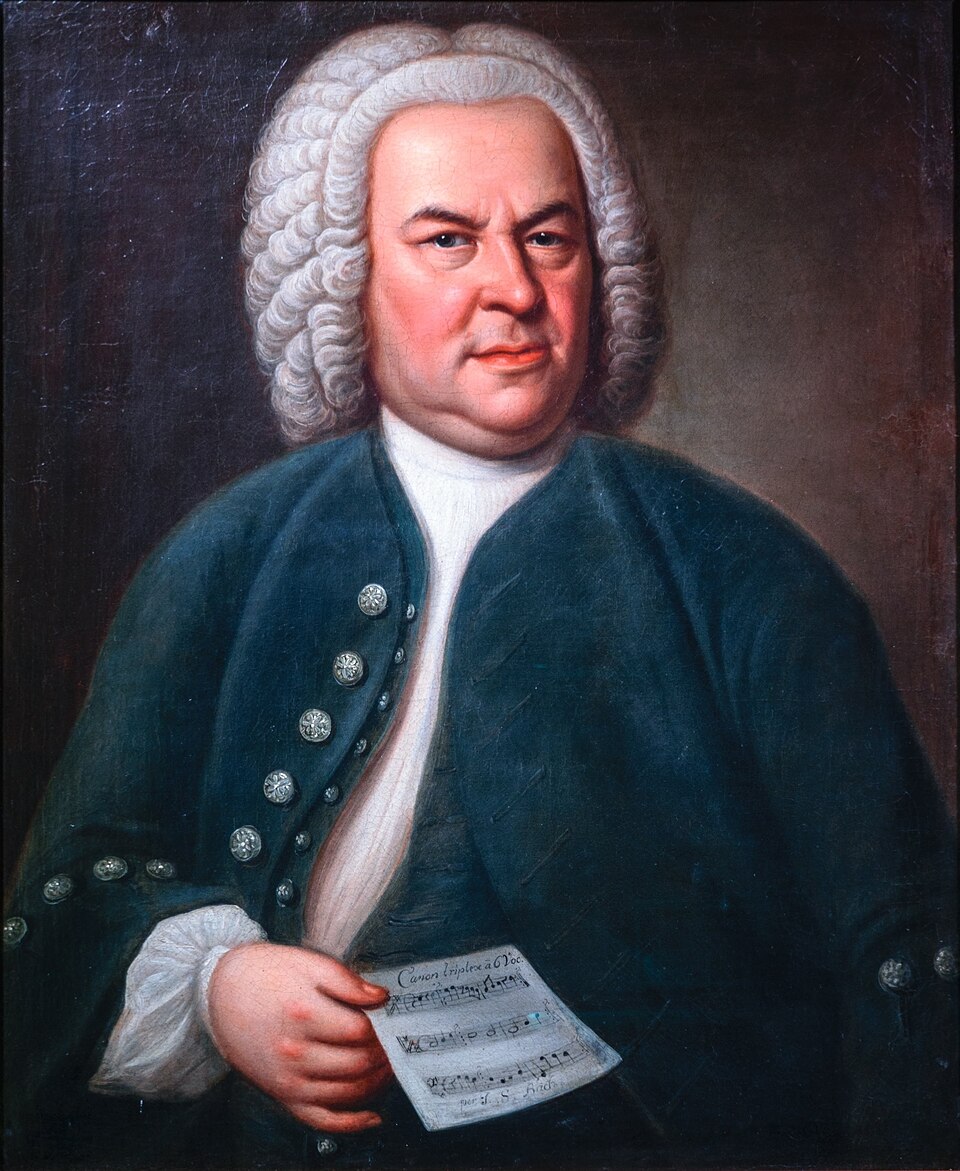
When he taught composition, Johann Sebastian Bach began with four-part thorough-bass (i.e., figured bass—shorthand for harmonic progressions) because it made the conception of the pure progression of the harmony most intelligible. From there he went to the chorale…Everywhere he insisted not only on the utmost purity of the harmony in itself, but also on naturalness of progression and a melodic flow of all the separate voices. — Johann Nikolaus Forkel: Johann Sebastian Bach: His Life, Art, and Work (1820)
The following rules and guidelines are drawn from examples of Bach’s and other master composer’s superlative chorale writing. Following the rules and avoiding part-writing errors will lead directly to better melodic flow in all the voices and an overall purity in the harmony itself.
The number of rules and guidelines may seem overwhelming at first but in time and with practice, they will become more intuitive. As with all aspects of music, practice is the best method for developing proficiency and eventually mastery of four-part chorale composition.
Rules are to be followed without exception.
Guidelines are not as rigid as the rules but should always be thoughtfully considered in combination with the rules.
You’ll find that the master composers occasionally “break” the rules. They have very good reasons for doing so, usually to preserve smooth voice leading. Unless you identify as a master composer, follow the rules!
Guidelines
Doubling
- Double the root most of the time.
- Double the 5th some of the time (to maintain smooth voice leading).
- Double the 3rd rarely (as a last resort or to avoid committing part-writing errors).
- You may omit the 5th from a triad (never omit the root).
Voice Leading
- Try to retain common tones from one chord to the next.
- Try to maintain stepwise motion in the upper voices (the bass is more likely to leap).
- Avoid direct octaves and fifths between the soprano and bass (unless the soprano moves by step).
Leaps vs. Steps
- Avoid unnecessary leaps.
- Avoid multiple leaps in the same direction.
- Avoid melodic leaps involving dissonant intervals.
- Avoid too much parallel motion.
- Try to maintain contrary motion (e.g., if three voices move down, the fourth should move up).
Rule No. 1
Stay Within the Range of Each Part
Keep most of the music near the middle of each voice’s range and only occasionally venture to the outer limits.
The whole notes represent the generic limits of each vocal part. Individual singers can possibly exceed the range given but choral parts should be kept within these suggested pitches.
The filled-in notes represent each voice’s tessitura (the range within which most notes of a vocal part fall).
Treat each voice as an independent part by using the correct stem direction. Soprano (in the treble clef) and Tenor (in the bass clef) have upward pointing stems while Alto (in the treble clef) and Bass (in the bass clef) have downward pointing stems.
Rule No. 2
Do not exceed an octave in the upper voices
Up to an octave between the soprano and alto or alto and tenor is okay but anything beyond that is unacceptable.
In the bad chorale, the soprano is relatively high in its range and the alto moves down and away from the soprano, creating intervals larger than an octave.
In the good chorale, the soprano and alto have been slightly modified to stay closer. Notice that the alto now has the pitches that the soprano had in the previous example.
The distance between the tenor and bass may exceed an octave up to a tenth, as seen in the second chord.
Rule No. 3
Do not move in parallel unisons, fifths, or octaves
Parallelism of these intervals leads to the aural effect of one of the voices dropping out of the texture.
Parallel fifths and octaves were common in medieval music but sound out of place in tonal music.
Notice how easy it is to accidentally create parallelism between various voices.
Repeating a perfect fifth or octave on the same pitches does not constitute parallelism—the voices need to both move in parallel motion.
In the good chorale, the alto leaps up to A on the third chord in order to avoid parallelism. Introducing inversions in the chord progression would provide opportunities for more stepwise motion.
Rule No. 4
Do not double tendency tones
Do not double tendency tones. Tendency tones include ^7 (leading tone), chromatically altered notes, and chordal dissonances (e.g., the seventh of V7).
Tendency tones draw attention to themselves and must be resolved by step. In this case, resolving the doubled leading tone, B, results in parallel octaves.
The F in the second to last chord is also a tendency tone (chordal dissonance) and must be resolved down by step. Doubling this note would also lead to parallelism.
Rule No. 5
Do not cross voices
Do not cross voices. Voice crossing results when two adjacent voices are placed higher/lower than each other in the same chord.
Poor voice leading choices and a lack of awareness of other vocal part’s registers leads to voice crossing. In the bad example, the tenor leaps up to a G in the third chord which is higher than the alto’s E.
In the good example, the alto maintains common tone voice leading and the tenor moves by step instead of leaping. The smoother, stepwise voice leading is easier to sing and avoids voice crossing.
Rule No. 6
Do not overlap voices
Do not overlap voices. Overlap occurs when one part leaps above or below an adjacent part’s previous pitch.
In the bad example, the soprano leaps from A to D. The D is lower than the alto’s F in the previous chord.
In the good example, the soprano moves by step in the opposite direction of the alto’s downward leap. There is nothing wrong with leaping but when multiple voices leap together in the same direction, part writing errors are more common.
Rule No. 7
Resolve the 7th down by step
When resolving a dominant seventh chord, always resolve the seventh of the chord down by step in the same voice—it is a tendency tone.
This is perhaps the most common part writing error. It is easy to forget that the seventh in a dominant seventh chord is a tendency tone and must be resolved properly.
Do not confuse the seventh of a chord with the seventh scale degree (i.e., leading tone). They are both tendency tones but they each have different resolution requirements.
Rule No. 8
Resolve ^7 up by step to the tonic when it’s in the soprano
The leading tone does not need to be resolved up by step to the tonic if it is in an inner voice or part of the descending pattern ^8–^7–^6–^5.
Of all the tendency tones, the leading tone has the strongest need to resolve. When it is prominently placed in the soprano, it must resolve up by step to the tonic.
This typically occurs in a dominant to tonic resolution. If another dominant follows the first and the soprano is on the leading tone in the first dominant chord, the soprano may move to another note in the second dominant chord. For example, B moving to D.
Rule No. 9
Avoid augmented seconds
The augmented second looks like stepwise motion but it enharmonically spells a minor third.
Augmented seconds are difficult to sing because they are deceptively spelled. They look like stepwise motion but are actually minor thirds.
They are common problems in minor keys because of the raised leading tone. Adjustments to the alto and tenor voice leading solves the problem.
Rule No. 10
Never omit the root or the third
Without the root, the chord has no identity. Without the third, the quality of the chord is ambiguous.
The second chord of the bad example has no third and a tripled root. The last chord also omits the 3rd and triples the root.
In the good example, notice that the alto in the second chord is a common tone from the previous harmony and provides the necessary third. Following good voice leading practices almost always results in fewer part writing errors.
Example Chorales
The main difference between these two chorales is the voice leading. The bad chorale has many more leaps than the good chorale, particularly in the soprano and alto. There is nothing inherently wrong with leaps but the vast majority of voice leading in successful chorales is stepwise. Leaps are used occasionally and usually resolved by step.
Common tone voice leading is quite prevalent in the second chorale, in fact, every chord has a common tone from the previous harmony except for the final tonic. Utilizing common tones as much as possible may seem like it would make the music stagnate and uninteresting, on the contrary, the second chorale sounds quite elegant. It is also much easier to sing and play at the keyboard.
Chapter 10 Quiz
Test your knowledge on this chapter’s material before moving on.